
“Boundaries don’t break mentorship—they strengthen it. Here’s how to set them effectively.”
Healthy boundaries are essential for any successful mentorship relationship. Without them, mentees may feel overburdened or mentors may feel undervalued. Setting boundaries doesn’t mean saying “no” to everything; it’s about defining limits that preserve mutual respect.
Steps to set boundaries
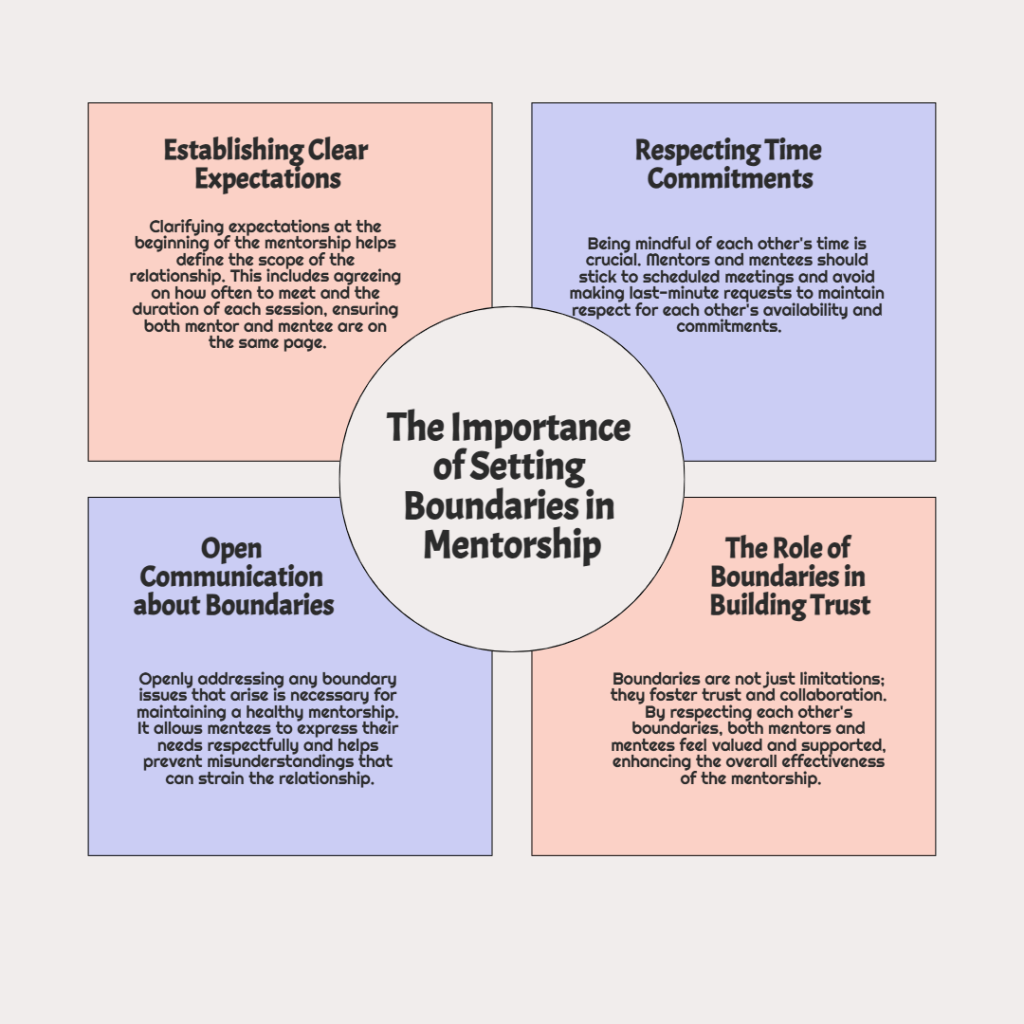
- Clarify Expectations Early: Discuss the scope of the mentorship relationship upfront.
- Example: Agree on the frequency and duration of meetings.
- Respect Time: Be mindful of your mentor’s availability. Stick to agreed meeting schedules and avoid last-minute requests.
- Communicate Openly: If boundaries are crossed, address it respectfully.
- Example: “I value your advice, but I’d prefer to keep our discussions focused on professional topics.”
example
Maria felt overwhelmed when her mentor started assigning tasks outside their agreed scope. She addressed the issue by saying, “I appreciate the opportunities you’re suggesting, but I’d like to focus on the skill-building goals we discussed.”
why boundaries matter
Boundaries create a framework for trust, respect, and collaboration. They ensure both parties feel valued and supported without overstepping limits.
summary
Boundaries aren’t barriers—they’re bridges to better mentorship. Ready to build stronger relationships?
Follow us on LinkedIn for weekly mentorship strategies,
www.linkedin.com/in/mentorship-coaching.com
 Mentorship Navigator
Leave a comment