
“Are you reflecting on your mentorship journey? If not, you’re leaving growth on the table.”
Reflection is the bridge between learning and action in mentorship. Without it, the valuable insights gained during mentorship sessions risk being forgotten or underutilized. Reflecting on mentorship conversations allows mentees to deepen their understanding, identify actionable steps, and internalize lessons. It’s a chance to evaluate what worked, what didn’t, and how to adjust moving forward. By building a consistent reflection habit, mentees can transform one-off pieces of advice into long-term improvements that align with their goals. Mentors, too, benefit from reflection, as it helps them assess their guidance’s effectiveness and adapt their approach to better meet the mentee’s needs.
building a reflection habit is simple
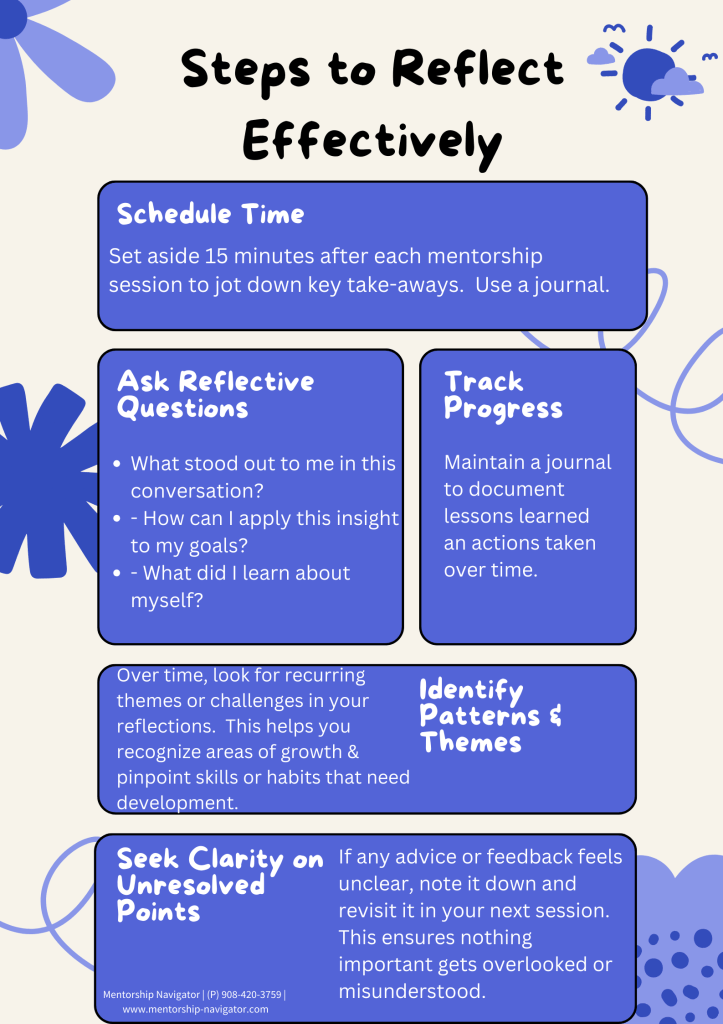
- Schedule Regular Reflection Time: Set aside 15 minutes after each mentorship session to jot down key takeaways.
- Ask Reflective Questions:
- What stood out to me in this conversation?
- How can I apply this insight to my goals?
- What did I learn about myself?
- Track Progress: Maintain a journal to document lessons learned and actions taken over time.
- Identify Patterns and Themes:
Over time, look for recurring themes or challenges in your reflections. This helps you recognize areas of growth and pinpoint skills or habits that need further development. - Seek Clarity on Unresolved Points:
If any advice or feedback from your mentor feels unclear, note it down and revisit it in your next session. This ensures nothing important gets overlooked or misunderstood.
example
When Emily began working with her mentor, she often felt overwhelmed after their sessions, unsure how to apply all the advice she received. Her mentor encouraged her to start keeping a reflection journal. After each meeting, Emily wrote down three things: what resonated most, one action step she could take immediately, and one question to explore further.
In one session, her mentor suggested she improve her communication skills to strengthen her leadership potential. Emily reflected on this, identifying her struggle with clarity during team meetings. She practiced structuring her thoughts before each meeting and documented the results in her journal. By the next mentorship session, Emily shared her progress and asked for further advice on engaging her team during Q&A sessions. This consistent reflection and feedback loop not only helped Emily improve her skills but also strengthened the mentorship relationship, making their sessions more focused and impactful.
why it matters
Reflection turns insights into growth. It’s the secret sauce that keeps you moving forward.
summary
Reflection is a simple yet transformative tool for getting the most out of mentorship. By dedicating time to process insights and turn them into action, both mentees and mentors can ensure their efforts lead to meaningful growth. Ready to maximize your mentorship experience? Follow us for more tips on building reflective habits and achieving your goals!
 Mentorship Navigator
Leave a comment