
“Feedback is only half the battle. What you do with it determines your success.”
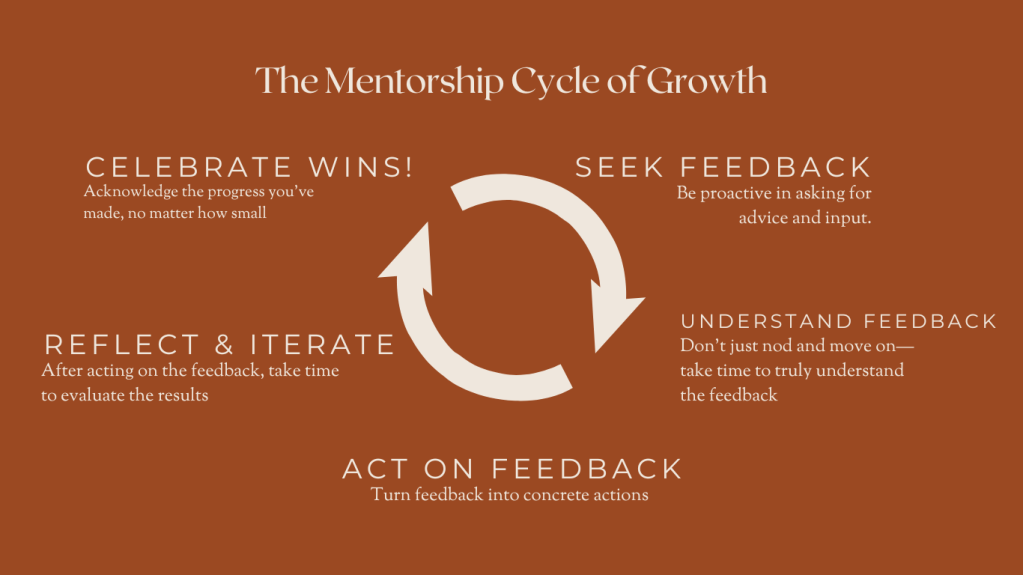
Receiving feedback is critical to growth, but the real transformation happens when you act on it. Mentorship is a dynamic process where feedback becomes a stepping stone for improvement. The Mentorship Cycle of Growth helps mentees harness feedback effectively through these five steps:
1. seek feedback
Be proactive in asking for advice and input. Don’t wait for your mentor to offer it—initiate the conversation. Ask specific questions like, “What areas do you think I should focus on to improve my leadership skills?” or “Do you have suggestions for handling X challenge?”
Why It Matters: Seeking feedback shows initiative, builds trust, and sets the stage for meaningful guidance.
2. understand feedback
Don’t just nod and move on—take time to truly understand the feedback. Ask clarifying questions to ensure you know exactly what your mentor is advising. Paraphrase their points back to them: “So, you’re suggesting I work on being more assertive in team meetings. Is that right?”
Why It Matters: Misunderstanding feedback can lead to misaligned efforts, so clarity is essential for actionable results.
3. act on feedback
Turn feedback into concrete actions. Break down he advice into manageable steps and focus on tackling on aspect at a time. Create a plan that outlines what you’ll do, when you’ll do it, and how you’ll measure success.
Why it Matters: Feedback only creates value when it leads to action. Implementation is where growth truly happens.
4. reflect & iterate
After acting on the feedback, take time to evaluate the results. Did the changes lead to the desired outcome? What worked, and what could be improved further? Share your reflections with your mentor to close the loop and gain additional insights.
Why It Matters: Reflection solidifies lessons learned and ensures continuous improvement, making each mentorship cycle more effective.
5. celebrate wins!
Acknowledge the progress you’ve made, no matter how small. Whether it’s mastering a single skill or receiving positive feedback from colleagues, celebrating wins motivates you to keep going.
Why It Matters: Recognizing achievements reinforces confidence, fosters motivation, and strengthens the mentorship relationship.
example:
David’s mentor suggested he improve his concise communication skills, pointing out that his emails were often too lengthy and unclear. David acted immediately by creating shorter drafts, using bullet points, and focusing on key messages. He sought feedback from his mentor and team after each adjustment, asking, “Is this clearer and more direct?” Over the next three months, David’s emails became models of clarity. His manager even highlighted his improved communication in a team meeting, boosting his confidence. David reflected on the process, realized the importance of breaking down feedback into small steps, and started applying the same approach to his presentations. This cycle of growth turned a single piece of feedback into a career-long skill.
tips to act on feedback
- Break Feedback into Manageable Steps: Avoid overwhelm by tackling one part of the advice at a time.
- Set Deadlines for Implementing Advice: Create urgency and accountability by adding timelines to your action plan.
- Share Progress with Your Mentor: Keep your mentor updated to maintain accountability and refine your approach.
- Track Results Over Time: Document how acting on feedback has improved your skills or performance. This will help you see tangible progress and make better decisions in the future.
summary
Feedback fuels growth, but its real power lies in how you use it. The Mentorship Cycle of Growth—seeking, understanding, acting on, reflecting, and celebrating feedback—ensures you turn advice into meaningful progress. It’s a dynamic process that not only builds skills but also strengthens your relationship with your mentor. By proactively seeking feedback, breaking it into actionable steps, and sharing your progress, you create a loop of continuous improvement. Whether you’re refining your communication, leadership, or technical skills, this approach helps you evolve at every stage.
Ready to take charge of your growth journey? Follow us on LinkedIn for more mentorship tips and strategies!
 Mentorship Navigator
Leave a comment