
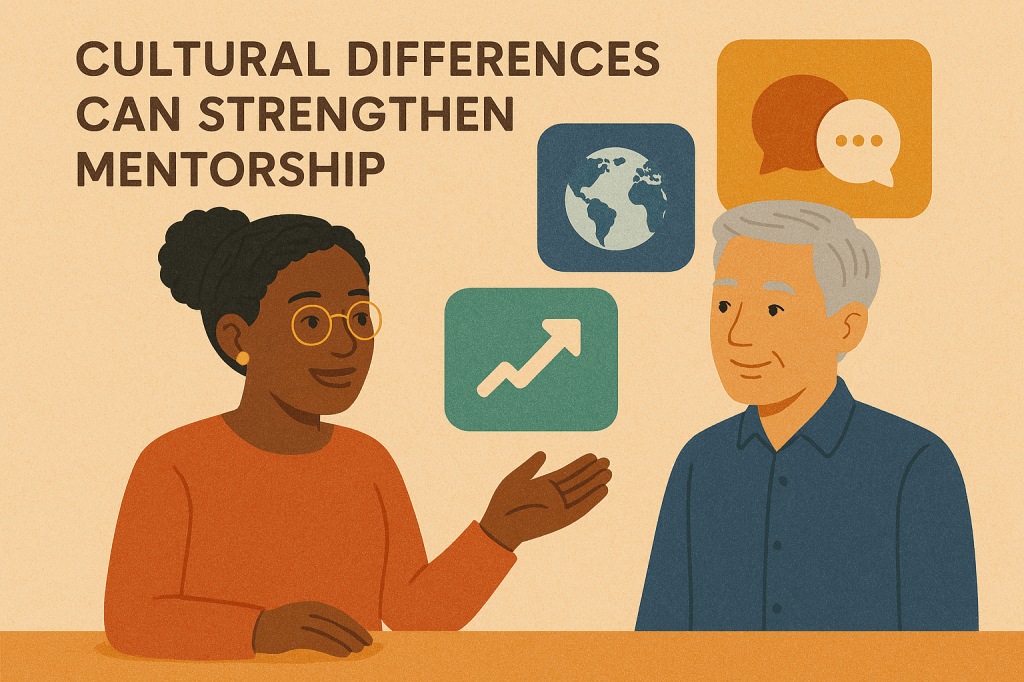
“Can cultural differences strengthen mentorship? Absolutely—here’s how.”
In today’s interconnected world, remote mentorship often bridges individuals from diverse cultural backgrounds. While these differences can present challenges, they also offer unique opportunities for growth, innovation, and empathy.
Benefits of Cross-Cultural Mentorship:
- Broader Perspectives: Engaging with diverse viewpoints fosters creativity and enhances problem-solving skills. Exposure to different cultural approaches can lead to innovative solutions that might not emerge in a monocultural setting.
- Improved Communication: Navigating cultural nuances necessitates clear and adaptable communication. This process sharpens one’s ability to convey ideas effectively and understand others, a crucial skill in any professional environment.
- Mutual Growth: Both mentors and mentees gain insights from each other’s unique backgrounds, leading to personal and professional development. This reciprocal learning enhances cultural competency, a valuable asset in global collaborations.
How to Succeed in Cross-Cultural Mentorship:
- Learn About Each Other’s Culture: Dedicate time to understanding your counterpart’s cultural norms and values.
- Example: Researching communication styles or decision-making approaches specific to your mentor or mentee’s culture can prevent misunderstandings and build trust.
- Set Clear Expectations: Define goals, roles, and preferred communication methods early in the relationship to avoid potential conflicts. Establishing a mutual understanding sets a solid foundation for productive interactions.
- Practice Patience and Empathy: Recognize that cultural differences may lead to varying perspectives and approaches. Approaching these differences with patience and empathy fosters a respectful and open-minded mentorship environment. (Culturally Aware Mentoring | Rutgers University Equity and Inclusion)
Example:
Consider a mentorship pairing between Ravi, a mentor from India, and Clara, a mentee in Germany. By proactively learning about each other’s cultural backgrounds, they avoided assumptions and built a relationship grounded in mutual respect and shared learning. This approach not only enhanced their mentorship experience but also contributed to their professional growth. (https://www.jointhecollective.com/article/the-importance-of-cross-cultural-mentorship-in-modern-leadership/?utm_source=chatgpt.com)
Why It Matters:
Cross-cultural mentorship cultivates innovation, empathy, and collaboration—skills that are indispensable in today’s globalized world. Embracing cultural diversity within mentorship relationships prepares individuals to navigate and lead in multicultural environments effectively. (The Importance of Cross-Cultural Mentorship in Modern Leadership)
summary
Cultural differences in mentorship are not obstacles but opportunities. By embracing diversity, mentors and mentees can enrich their professional relationships and drive personal growth.
Follow us on LinkedIn for more actionable tips on enhancing your mentorship experiences.
#CrossCulturalMentorship #MentorshipSuccess #RemoteMentorship #GlobalLeadership #DiversityAndInclusion #ProfessionalGrowth
https://diversity.rutgers.edu/inclusive-mentoring?utm_source=chatgpt.com
 Mentorship Navigator
Leave a comment