
“Great mentorships don’t just happen—they’re built through effort, alignment, and adaptability.”
Mentorship has the power to transform careers, unlock potential, and build lifelong professional relationships. But here’s the truth: not all mentorships work. In fact, many falter—some fizzle out due to mismatched expectations, others break down because of poor communication or lack of follow-through.
So what separates the successful ones from those that fail?
Let’s break it down—and more importantly, let’s explore how you can avoid the pitfalls and build a mentorship relationship that actually works.
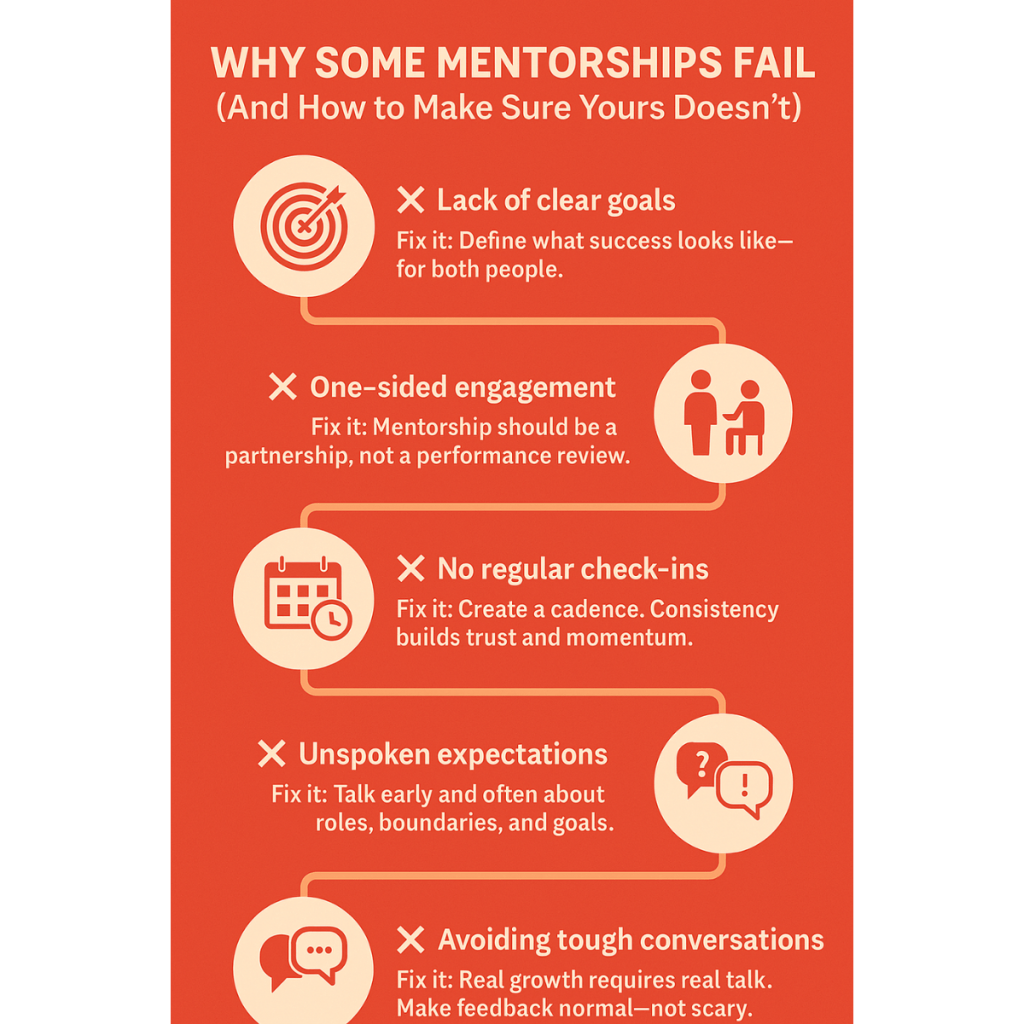
The Hidden Reasons Mentorships Fall Apart:
- Lack of Clarity
Many mentorships begin with vague goals—or worse, no goals at all. When mentees aren’t clear on what they want, and mentors don’t know how to support, both sides flounder. It becomes a series of polite but unproductive conversations.
- Mismatch in Commitment
A mentorship only works when both parties are equally invested. If one shows up consistently while the other is frequently rescheduling or unprepared, trust erodes quickly.
- Failure to Align Expectations
Some mentors think they’re there to give advice. Others take a more hands-on, coaching approach. Meanwhile, mentees may want empathy, career guidance, or specific industry insights. Without mutual understanding, frustration builds.
- No Feedback Loop
Great mentorships include regular check-ins and honest reflection. When feedback is missing, the relationship can grow stale or misaligned without either person realizing it.
real-world example:
Samantha was a young marketing professional matched with a seasoned executive mentor through her company’s mentorship program. At first, things seemed promising—they both worked in the same industry, and their first meeting was enthusiastic.
But after a few months, things started to unravel. Samantha felt like her mentor wasn’t giving actionable advice. Her mentor, on the other hand, thought Samantha wasn’t taking enough initiative. The meetings became sporadic, and eventually, they stopped altogether.
What went wrong?
They never set clear goals. They didn’t discuss how often they would meet. Neither side knew what the other expected from the relationship. As a result, a promising mentorship ended before it had the chance to grow.
Fortunately, Samantha joined a second mentorship program a year later—but this time, she took control. She showed up to the first meeting with a short list of learning objectives, proposed a meeting cadence, and asked her mentor how they preferred to give feedback.
The result? A productive, ongoing mentorship that led to a promotion within a year.
how to build a mentorship that lasts:
Here are four things you can do—starting now—to ensure your mentorship doesn’t fail:
1. Define Purpose and Goals Early
Don’t wait for things to “naturally unfold.” Clarify what you want to get out of the mentorship in the first or second meeting. Are you looking for career guidance? Skill development? Leadership insights?
2. Set Expectations Together
Align on frequency of meetings, communication preferences, and what success looks like. Do you want informal chats, or structured progress reviews?
3. Stay Flexible and Adapt
Life happens. Deadlines, job changes, and priorities shift. The best mentorships adapt. Revisit goals every few months and adjust based on what’s working—and what’s not.
4. Create a Feedback Culture
Normalize giving and receiving feedback. Ask, “What’s one thing I could do to make this mentorship more valuable to you?” It keeps the relationship dynamic and transparent.
final thought:
Mentorship isn’t magic—it’s a craft. And like any craft, it needs intention, attention, and communication to succeed.
So if you’re in a mentorship right now, ask yourself:
- Have we defined what success looks like?
- Are we aligned on expectations?
- Are we both committed to showing up?
If the answer is “no” to any of these, don’t panic—just reset. Because with the right effort, alignment, and adaptability, your mentorship can become one of the most impactful relationships in your professional journey.
Tags:
#Mentorship #LeadershipDevelopment #CareerGrowth #ProfessionalDevelopment #MenteeTips #MentorAdvice #SuccessInMentorship #SelfLeadership #WorkplaceGrowth #MentorshipStrategy
 Mentorship Navigator
Leave a comment