
“Looking for a mentor who has it all figured out? You’re chasing a myth.”
The idea that the best mentors are flawless, all-knowing experts is not only a misconception but also a barrier to meaningful mentorship. When we expect mentors to have all the answers, we risk creating unrealistic expectations that undermine the relationship. Mentorship isn’t about perfection; it’s about partnership. The best mentors don’t hand you solutions—they help you discover them. They act as guides who offer support, ask the right questions, and share lessons from their own journey.
This collaborative approach fosters independence and encourages critical thinking. Instead of focusing on finding a mentor who “has it all,” seek someone willing to grow with you. True mentorship thrives when it’s built on trust, mutual learning, and a shared commitment to progress—not on one person’s expertise alone. A great mentor isn’t there to be your guru; they’re there to walk alongside you as you navigate your path.
why this myth exists
- Society Glorifies Perfection in Leaders:
Cultural narratives often portray leaders as infallible experts, making it difficult to accept that even the best mentors are still learning and evolving. - Mentees Often Seek Certainty in Uncertainty:
During times of doubt, mentees may crave definitive answers and absolute solutions rather than exploring their own capacity for problem-solving. - The Pressure to Find the “Perfect Mentor” Can Lead to Unrealistic Expectations:
Many mentees believe they need a mentor who has already mastered every challenge, overlooking the value of shared growth and collaboration. - Cultural Bias Toward Expertise Over Growth:
In many cultures, mentors are seen as authorities whose value lies in their expertise rather than their ability to facilitate learning. - Fear of Vulnerability in Mentorship Relationships:
Both mentors and mentees may avoid acknowledging imperfection, fearing it could damage their credibility or the relationship itself.
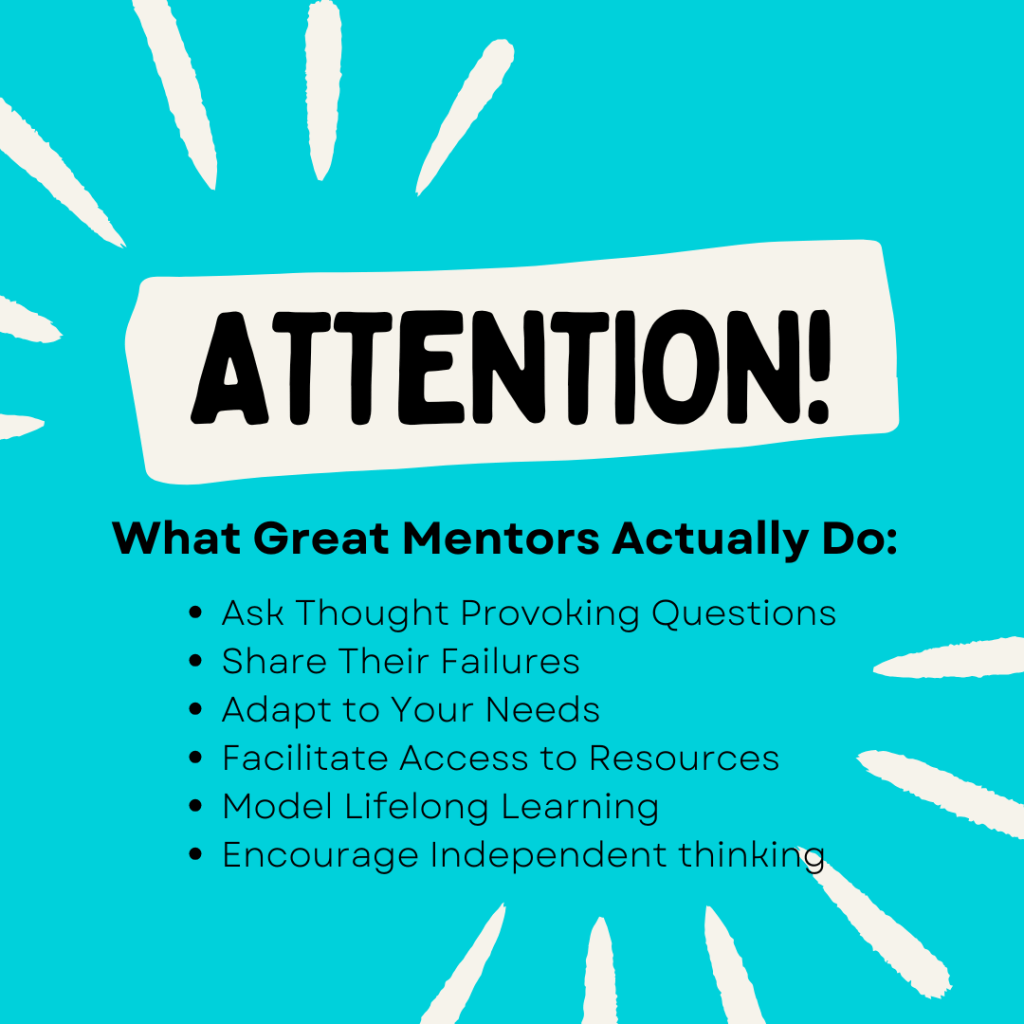
what great mentors actually do
- Ask Thought-Provoking Questions:
Great mentors encourage you to think critically by asking open-ended questions that challenge your assumptions and push you to explore new possibilities. - Share Their Failures:
Instead of presenting themselves as flawless, they openly discuss their missteps and what they’ve learned from them, demonstrating that failure is a stepping stone to growth. - Adapt to Your Needs:
They listen carefully to your unique challenges and tailor their guidance to your evolving goals and circumstances. - Facilitate Access to Resources:
Great mentors connect you with tools, networks, and additional experts to help you grow, showing that they value collaboration over omniscience. - Model Lifelong Learning:
By embracing their own growth journey, they inspire you to adopt a similar mindset of continuous improvement and curiosity. - Encourage Independent Thinking:
They help you build confidence in your ability to make decisions and solve problems by guiding rather than directing your actions.
example
When Alex, a budding entrepreneur, sought guidance for his startup challenges, his mentor admitted upfront that they didn’t have all the answers. Instead of pretending to know it all, the mentor encouraged Alex to break down his problems into smaller, manageable questions. Together, they researched solutions, brainstormed strategies, and consulted other experts in the field. This collaborative process not only resolved Alex’s immediate challenges but also equipped him with the problem-solving skills he needed to tackle future obstacles independently. Over time, Alex realized that the most valuable aspect of the mentorship wasn’t having all the answers handed to him—it was learning how to find those answers himself.
why it matters
Mentorship isn’t about taking shortcuts or relying on someone else’s expertise; it’s about fostering independence, resilience, and the ability to navigate complex challenges. A mentor who helps you think critically, embrace your own problem-solving process, and learn from failures provides a much greater long-term benefit than one who simply gives you solutions. Recognizing that mentors don’t need to be perfect frees both parties from unrealistic expectations, allowing the relationship to focus on growth and collaboration. By understanding that mentorship is a shared journey, not a one-sided transfer of knowledge, you unlock its full potential.
summary
The perfect mentor doesn’t exist, and that’s a good thing. The best mentors don’t give you all the answers—they empower you to find your own through thoughtful questions, shared experiences, and tailored guidance. They model lifelong learning, demonstrate the value of failure, and encourage independent thinking. By focusing on collaboration and shared growth rather than expertise alone, mentorship becomes a powerful tool for developing resilience, critical thinking, and confidence. Let go of the myth of the “all-knowing mentor” and embrace the dynamic, imperfect journey of mentorship. Follow us for more insights and strategies to make the most of your mentorship relationships!


Leave a comment